
Is Wall Printing Suitable for Children's Rooms? Questions to Ask Before Booking
Considering wall printing for a child's room? Learn what to ask about ink documentation, ventilation, wall preparation, cleaning and access before booking.
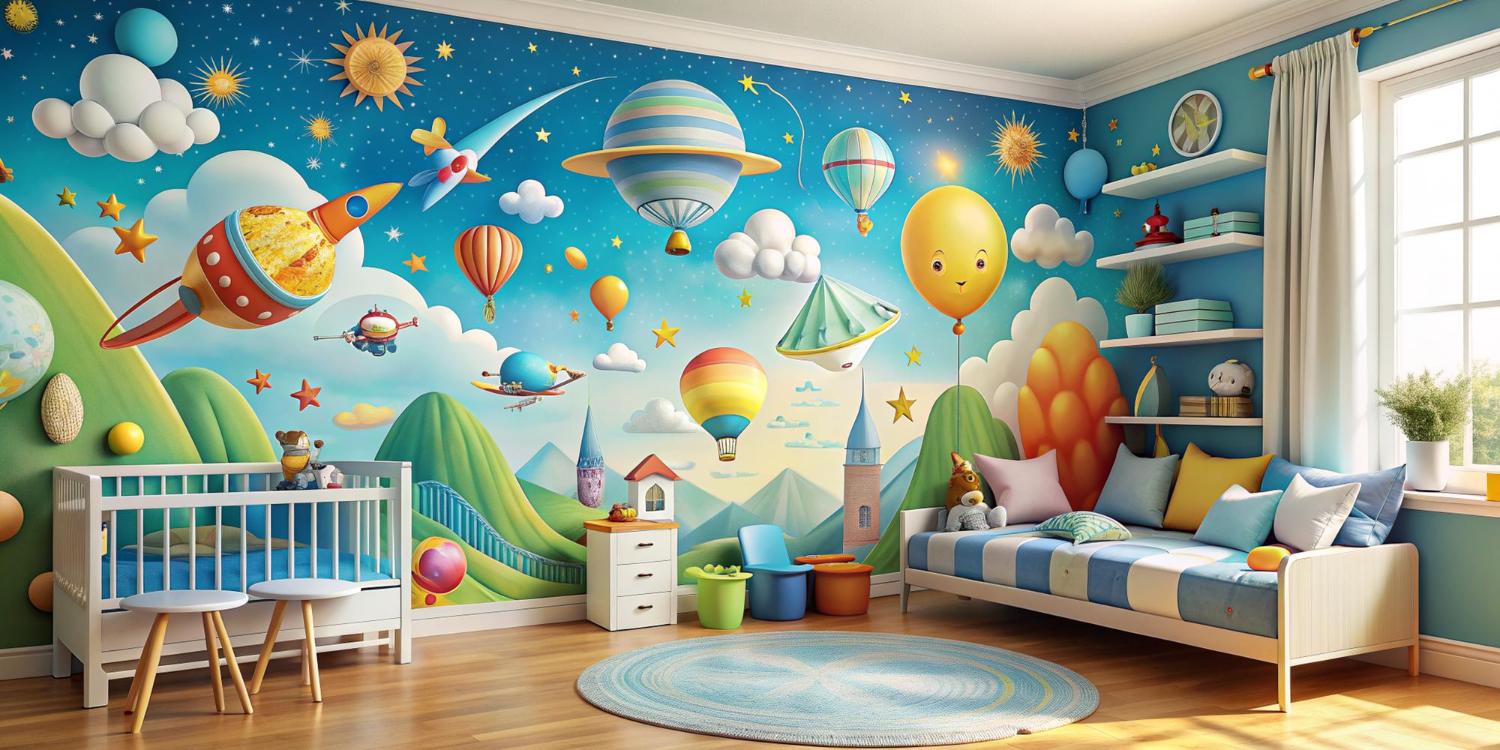
Wall printing can be suitable for a child’s room when the specific ink system, wall preparation and installation conditions are appropriate for that residential interior. Before booking, ask for ink documentation, a ventilation plan, room-access restrictions and cleaning instructions. A description such as “UV-cured” or “odourless” does not, by itself, establish suitability.
For parents asking, “Is wall printing suitable for children's rooms?”, the answer depends on the complete project—not simply the artwork.
Wallinks’ wall printing in Saudi Arabia offers a way to personalise a bedroom through artwork printed directly onto the wall. Here is what to confirm before choosing a design and installation date.
What Determines Whether Wall Printing Is Suitable for Children's Rooms?
A successful mural needs more than an attractive image. Assess four things:
Materials: The exact ink, primer and any protective coating.
Wall condition: Whether the surface is sound, dry and compatible.
Installation planning: Access, equipment positioning and ventilation.
Everyday use: Cleaning, contact with the surface and future changes.
For example, a freshly repainted nursery requires consideration of both the paint and the printing system. Even if printing is completed quickly, the underlying paint may have separate preparation and curing requirements.
Ask for Wall Printing Ink Documentation
Which ink and additional products will be used?
Request the manufacturer and product name for the ink. Also ask whether the installation requires a primer, adhesion promoter, cleaning chemical or protective finish.
Useful wall printing ink documentation includes:
A current safety data sheet, or SDS, for relevant products.
Technical information about compatible surfaces and curing.
Manufacturer guidance for indoor use.
Relevant emissions-testing information, where available.
Instructions covering handling, ventilation and cleaning.
An SDS explains hazards and handling precautions. It is not a blanket certificate that a finished mural is suitable for every child’s bedroom.
What supports claims such as “child-safe”?
Ask what was tested, which product the report covers and whether it applies to the installed finish.
HSE guidance on UV-curable printing identifies potential hazards during handling and operation, including skin sensitisation from some ingredients. This supports asking about the specific system and exposure controls; it does not establish that every finished UV-printed wall presents the same risk. Wide-format printing with UV-curable inks
When discussing residential wall printing services, request product-specific answers rather than relying on broad marketing descriptions.
Confirm Ventilation, Room Access and Handover
What is the ventilation plan?
Ask how fresh air will enter the room, whether extraction is required and how installation materials will be handled.
The US Environmental Protection Agency recommends following product instructions and increasing ventilation when using products that emit volatile organic compounds. This is general indoor-air guidance, not proof of emissions from a particular wall-printing ink. US EPA
In Saudi homes, clarify whether the air-conditioning system supplies outdoor air or mainly recirculates room air. Do not assume cooling alone meets the installer’s ventilation requirements.
Can children stay in the room during printing?
Plan for children and pets to remain outside the work area. Printing can involve moving equipment, cables, UV-curing components and installation supplies.
Ask when the room can be occupied again and obtain instructions covering the complete process, including any wall preparation. There is no universal waiting period that applies to every ink, coating and room.
Review the wall printing installation process before arranging furniture removal or changing your child’s sleeping arrangements.
Check the Wall Before Approving the Project
A mural cannot solve dampness, peeling paint or an unstable surface.
Provide photographs showing the whole wall and close-ups of:
Cracks, flaking paint or uneven areas.
Moisture staining or suspected mould.
Sockets, switches, shelves and fixed furniture.
Wall texture and the existing paint finish.
Ask whether repairs, repainting or an adhesion test are needed. Newly painted surfaces should meet the paint manufacturer’s and installer’s preparation requirements.
Confirm who is responsible for this work when requesting wall printing for homes and villas. Preparation should be included clearly in the project scope or listed separately.
Approve Custom Artwork at the Actual Wall Dimensions
Request a design mockup
A design that looks balanced on a phone may feel overwhelming across a bedroom wall.
A useful design mockup should show:
Final wall dimensions and printed area.
Placement relative to beds, wardrobes and doors.
Cropping around corners, sockets and shelves.
Text spelling and the artwork’s orientation.
Explore the wall printing gallery for visual direction, then judge the design against your own room layout.
For example, place important characters above a bed’s headboard rather than where furniture will hide them. Leave breathing room around study areas if that suits your child’s preferences.
Choose a design that can grow with the room
Nature scenes, space themes and illustrated landscapes may be easier to adapt than a design tied to a short-lived interest. The decision should reflect your child’s taste and your plans for redecorating.
Use custom wall artwork design to discuss scale and personalisation. Obtain documented client approval of the final mockup before printing begins.
Ask How the Printed Wall Should Be Cleaned
Request written cleaning instructions for the actual ink, wall paint and any protective finish.
Confirm:
When cleaning can begin.
Whether a damp cloth or mild detergent is permitted.
Which products and abrasive tools to avoid.
What to do if the surface becomes scratched or stained.
A washable finish is not necessarily resistant to permanent markers, repeated scrubbing or every disinfectant. Test an approved cleaning method in an inconspicuous area first.
Also ask whether future changes require repainting. Direct printing should not be assumed to remove like a reusable sticker.
Compare Wall Printing With Other Decoration Options
Direct wall printing offers artwork sized to the wall without wallpaper seams, but future changes may require surface preparation and repainting.
Wallpaper offers patterns and textures, although adhesive selection, seams and wall condition need consideration.
Decals may suit families who expect frequent changes, but removability depends on the product and paint.
Hand-painted murals offer individual artistic interpretation, with suitability depending on the paints, application method and room conditions.
Choose according to materials, maintenance and flexibility—not appearance alone.
Kids’ Room Wall Printing Safety Questions to Ask Before Booking
Use this checklist during your consultation:
What exact ink and preparation products will be used?
What documentation supports indoor use?
Is the wall ready, or does it need repair?
How will ventilation and room access be managed?
When can the child return to the room?
What does the quote include?
How should the wall be cleaned?
Has the final artwork been approved at the correct dimensions?
Compare the answers with the consultation-to-printing process so responsibilities are clear before scheduling.
Frequently Asked Questions
Is wall printing suitable for children's rooms and nurseries?
It can be, provided the materials and installation conditions are appropriate. For a nursery, confirm the ink documentation, wall-preparation products, ventilation and room-use instructions before agreeing to the work.
Does UV-cured ink automatically mean a mural is child-safe?
No. UV curing describes how the ink hardens. Suitability still depends on the specific formulation, correct application, curing and intended use. Ask for evidence covering the products being installed.
What wall printing ink documentation should parents request?
Ask for product identification, relevant safety data sheets, technical instructions and any applicable emissions-testing reports. Include primers and protective finishes, not just the ink.
What children’s room printing precautions are needed?
Keep children outside the work area, clear the equipment route, protect belongings and follow the agreed ventilation plan. Obtain handover instructions before returning the room to normal use.
Can a printed children’s mural be cleaned or changed later?
Cleaning depends on the installed finish and underlying wall. Follow approved instructions. Changing direct-to-wall artwork may require repainting; confirm the process before booking if flexibility matters.
Make the Decision Before Choosing the Installation Date
Wall printing can create a personal, engaging room. The strongest booking decision combines suitable materials, a prepared wall, approved artwork and clear installation and maintenance instructions.
Ready to discuss your child’s room? Contact Wallinks about your wall printing project. Share wall photographs, dimensions and your design idea, and request material documentation and installation guidance before confirming your booking.