
Where Should a Printed Mural Go? Placement Ideas Beyond the Obvious Wall
Wall mural placement ideas for Saudi homes and businesses: choose the right wall using sightlines, furniture height, natural light and room context.
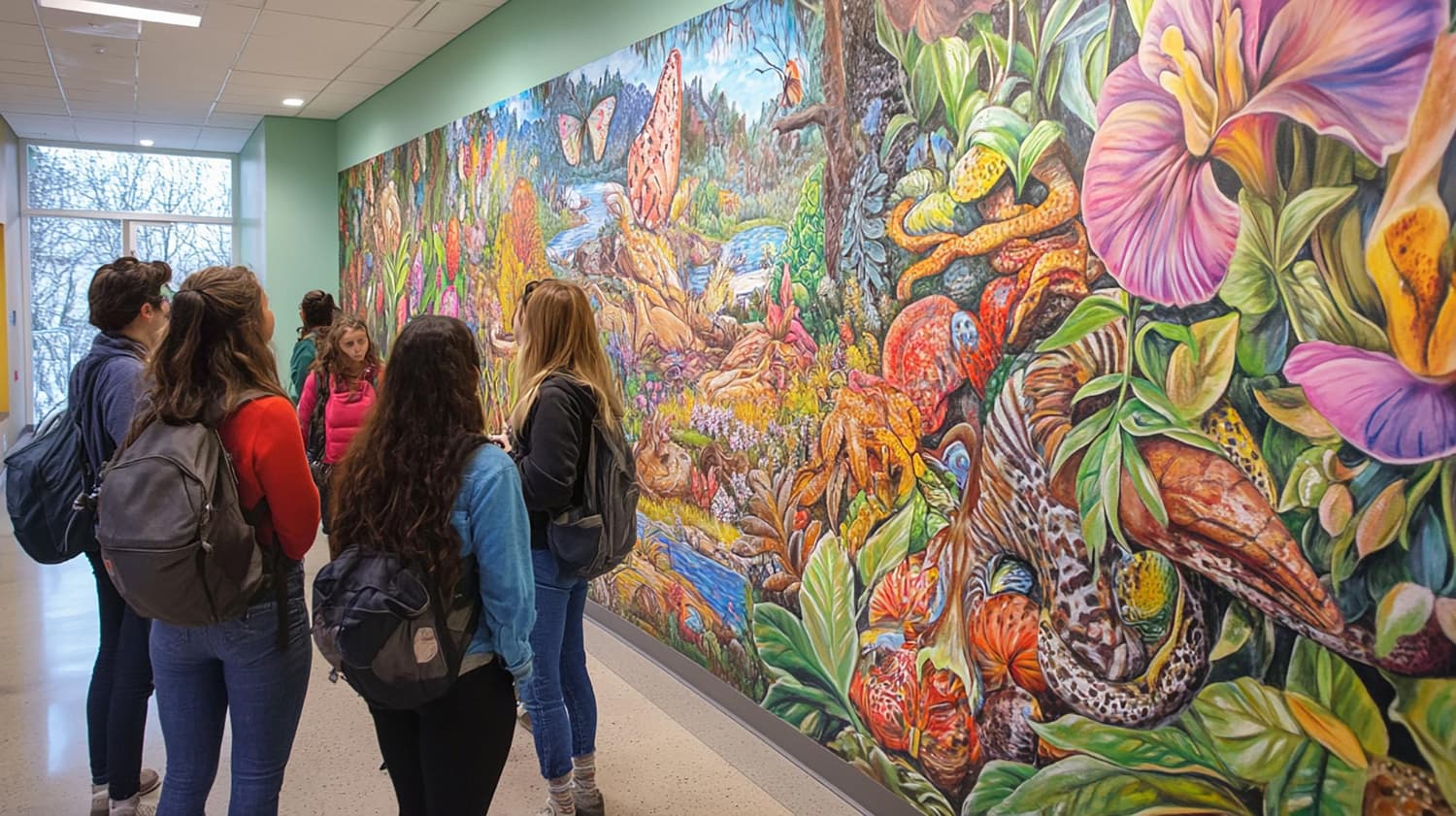
The best place for a printed mural is the wall people see first and look at longest: the wall facing the entrance, the wall behind the main seating, or a wall at the end of a corridor. Choose it by checking sightlines, furniture height, natural light and how the room is used, not just which wall is largest or emptiest.
Most wall mural placement ideas start with the obvious wall, the big blank one. Sometimes that is right. Often it is not, because a large wall hidden behind a sofa, crossed by a window glare at noon or only seen from a side angle will not carry a mural well. This guide covers placement for Saudi homes, villas and commercial interiors, and gives you a simple way to compare walls before you commit. It is about where the mural goes, not what it shows; for that, see our guide on choosing artwork style, size and quality for wall printing.
What makes a wall a good place for a mural?
A good mural wall has four qualities. Each one can be checked in a few minutes with a tape measure and your phone camera.
It sits on a main sightline
A sightline is the line of view people naturally follow when they enter or move through a space. Stand at the main door of the room and note the first wall your eyes land on. Then sit where you usually sit and do the same. The wall that appears in both views is usually the strongest focal point candidate.
It is not hidden by furniture
Measure the height of the sofa backs, beds, consoles, cabinets and televisions planned for the wall. A mural whose key detail sits at the same height as a sofa back will be half covered. The visible area above and around the furniture is the real canvas.
It has workable light
Watch the wall at the times the room is most used. Strong side light from a window can create glare or uneven brightness across the design, while a wall that is always in shadow may need lighting planned with the mural. Natural light is a placement factor, not just a decoration detail.
It suits the room context
A mural should fit the room's purpose and material palette: a calm wall behind a bed, a welcoming wall in a majlis, a brand wall in a reception. The wall's surface condition also matters: damp, cracked or uneven walls need attention before any design is planned.
Wall mural placement ideas for homes and villas
Every home is different, but some walls repeatedly make strong feature walls in Riyadh and Jeddah villas and apartments.
- The entrance or first-view wall: the wall guests face as they step inside. It sets the tone of the home and is seen by everyone. Double-height entrances need special planning, covered in our guide to villa entrance wall printing for double-height walls.
- The majlis end wall: the wall opposite the main seating in a majlis is viewed by seated guests for long periods, so detail and calm composition matter more than bold impact.
- The wall behind the bed: in bedrooms the headboard wall is the natural focal point. Keep the main detail above headboard height.
- The corridor end wall: a long corridor ends at a wall everyone walks toward. A mural there turns a dead end into a destination.
- The stair wall: a staircase wall is seen while moving up and down, so the design must read from several heights and angles.
- The dining wall: the wall seen from the dining table works well for murals with gentle detail that people enjoy over a long meal.
Where should murals go in commercial spaces?
In offices, clinics, restaurants and retail interiors, placement follows the visitor journey rather than personal taste.
- Reception wall: the wall behind or beside the reception desk is the first impression for clients and the most photographed wall in many offices.
- Waiting areas: the wall facing waiting seats is viewed for minutes at a time, which suits calm, detailed designs.
- Customer-facing corridors: long routes to meeting rooms or treatment rooms benefit from a mural at the turning point or end wall.
- Back-of-house and staff areas: a mural in a staff lounge or training room supports culture and is often easier to schedule because it is away from customers.
For commercial projects, check early who approves the design and the placement. A facilities team, landlord or brand team may need to sign off on the wall before artwork is finalised.
How do you compare two or three candidate walls?
When more than one wall looks promising, score each against the same questions. This simple framework keeps the decision practical:
- Is it seen from the entrance and from the main seats? Strong wall: seen from both. Weak wall: seen only from the side.
- How much stays visible after furniture is placed? Strong wall: most of the wall. Weak wall: less than half.
- How does light fall on it during use? Strong wall: even or easily lit. Weak wall: strong glare or deep shadow.
- Does it fit the room's purpose? Strong wall: a clear match. Weak wall: feels forced.
- Is the surface in good condition? Strong wall: sound and even. Weak wall: damp, cracked or uneven.
A wall that wins on sightlines and visible area usually beats a larger wall that loses on both.
How high should the main detail of a mural sit?
A widely used interior styling rule of thumb places the centre of artwork at roughly standing eye level, often quoted as around 145 to 150 cm from the floor. For a full-wall mural, the whole wall is covered, so the question becomes where the most important detail sits.
- In rooms where people mainly stand or walk, such as entrances and corridors, place the key detail near standing eye level.
- In rooms where people mainly sit, such as a majlis, living room or waiting area, the key detail can sit a little lower so it reads comfortably from the seats.
- In double-height spaces, plan a detail at eye level and a second point of interest higher up, so the design reads both up close and from upper floors.
- Keep faces, logos and text away from the zone that furniture, switches or doors will cover.
Which placement mistakes should you avoid?
- Choosing the emptiest wall by default. Empty is not the same as visible.
- Ignoring the television. A mural behind a large screen competes with it and loses most of its centre.
- Forgetting switches, sockets and vents. Mark them on a photo of the wall before the design is drafted.
- Placing a busy mural in a small, narrow room. In tight spaces, a mural on the end wall often works better than one on a long side wall seen too close.
- Deciding before the furniture plan is fixed. If the layout may change, wait or choose a wall the layout will not affect.
How can you test a placement before printing?
A visual mockup removes most of the guesswork. Take a straight-on photo of each candidate wall in daylight, with furniture in place or marked with tape. A designer can then place the draft artwork on the photo at the correct scale so you can see what stays visible. Viewing the mockup from your main seat or the entrance, on a phone held at eye level, is a quick reality check.
Share the photos and wall dimensions when you ask for advice. The same information supports planning in our wider guide to wall printing for homes and villas.
Frequently Asked Questions
Which wall is best for a mural in a living room?
Usually the wall that is visible both from the room entrance and from the main seating, and not covered by a television or tall furniture. Check how much of the wall remains visible above the sofa and how daylight falls on it. A slightly smaller wall that everyone faces often works better than a larger side wall.
Can a mural go behind a sofa or bed?
Yes, and it is a common choice, especially behind a bed where the headboard wall is the natural focal point. Plan the design so the main detail sits above the furniture line, and measure the sofa or headboard height first. Anything important placed below that line will be hidden in daily use.
Is a mural a good idea in a small room or corridor?
It can be. In small rooms and corridors the end wall is often the best choice, because people see it from a distance as they approach. Long side walls in narrow spaces are seen very close up, so calmer, simpler designs tend to work better there than detailed scenes.
How does natural light affect mural placement?
Strong side light can cause glare or make one part of the mural brighter than the rest, while a dark wall may hide detail. Look at each candidate wall at the times the room is used most. If the best wall by sightlines has poor light, plan lighting for it rather than moving the mural to a weaker wall.
What should I send to get placement advice?
Send a straight-on daylight photo of each candidate wall, the width and height of each wall, the city, a note on the furniture planned for that wall, and how the room is used. With this information a designer can prepare a scaled mockup so you can compare walls before approving the design.
Conclusion
The right mural wall is the one people see first and look at longest, with enough visible area after furniture, workable light and a clear fit with the room's purpose. Compare candidate walls on sightlines, furniture height, light and surface condition, place the key detail at the height people actually view it from, and test the choice with a scaled mockup before printing.
Not sure which wall in your home or business should carry the mural? Share your wall photos and dimensions with the WallInks team and get a placement recommendation and visual mockup for your space in Riyadh, Jeddah or elsewhere in Saudi Arabia.
Frequently Asked Questions
Which wall is best for a mural in a living room?
Usually the wall that is visible both from the room entrance and from the main seating, and not covered by a television or tall furniture. Check how much of the wall remains visible above the sofa and how daylight falls on it. A slightly smaller wall that everyone faces often works better than a larger side wall.
Can a mural go behind a sofa or bed?
Yes, and it is a common choice, especially behind a bed where the headboard wall is the natural focal point. Plan the design so the main detail sits above the furniture line, and measure the sofa or headboard height first. Anything important placed below that line will be hidden in daily use.
Is a mural a good idea in a small room or corridor?
It can be. In small rooms and corridors the end wall is often the best choice, because people see it from a distance as they approach. Long side walls in narrow spaces are seen very close up, so calmer, simpler designs tend to work better there than detailed scenes.
How does natural light affect mural placement?
Strong side light can cause glare or make one part of the mural brighter than the rest, while a dark wall may hide detail. Look at each candidate wall at the times the room is used most. If the best wall by sightlines has poor light, plan lighting for it rather than moving the mural to a weaker wall.
What should I send to get placement advice?
Send a straight-on daylight photo of each candidate wall, the width and height of each wall, the city, a note on the furniture planned for that wall, and how the room is used. With this information a designer can prepare a scaled mockup so you can compare walls before approving the design.