
Villa Wall-Printing Ideas: Create a Connected Story Across Rooms
Villa wall printing design ideas for Saudi homes: plan one connected story from entrance to bedrooms with a shared palette, motifs and clear room roles.
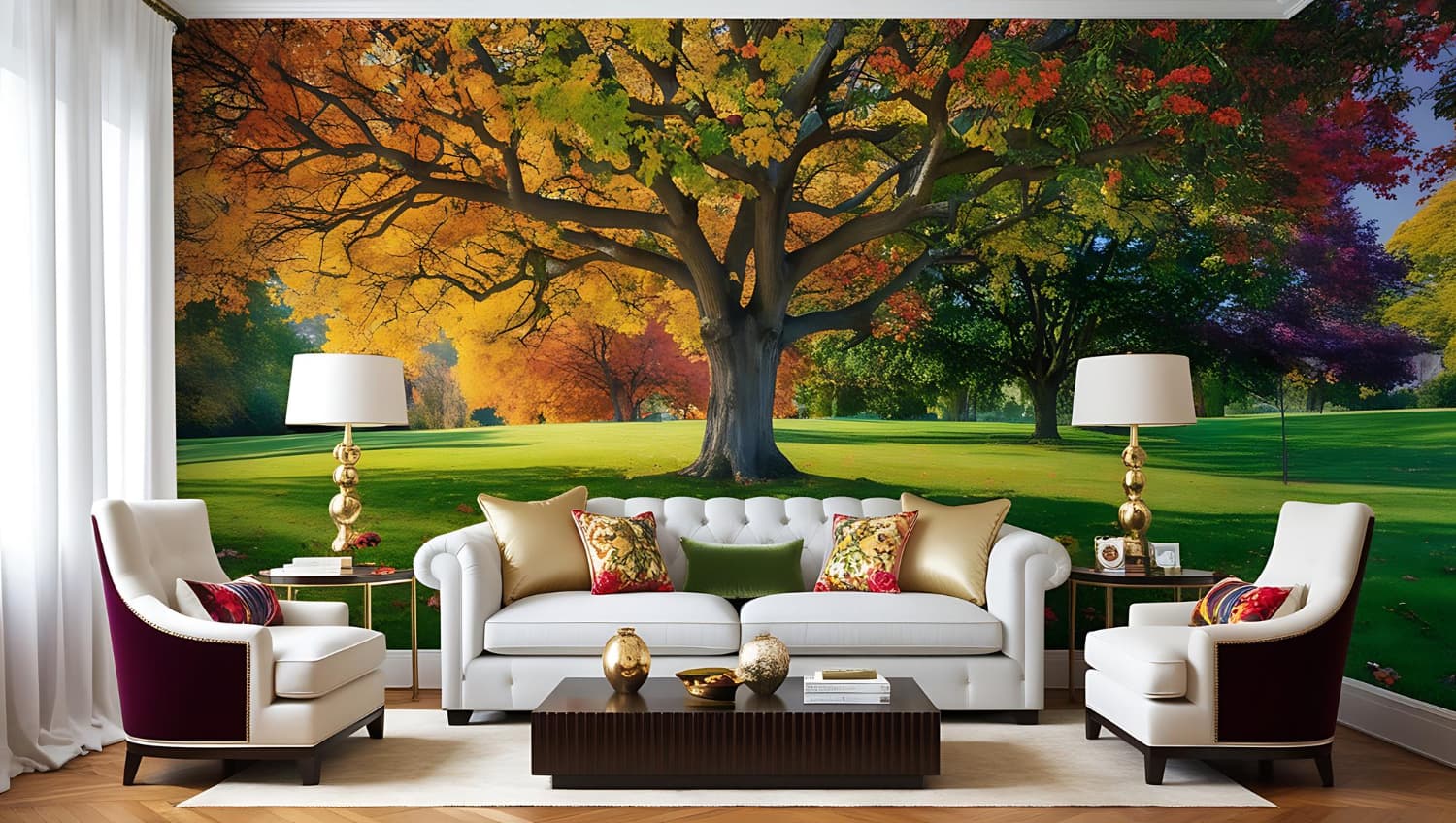
Villa wall printing design ideas work best when every printed wall belongs to one plan. Instead of choosing a separate image for each room, pick a shared palette, a recurring motif and a clear sequence from the entrance to the private rooms. Guests then read the villa as one connected story, and each printed wall feels intentional, never random.
This guide is for villa owners and residential designers in Riyadh, Jeddah and across Saudi Arabia who want more than one feature wall. It explains how to plan a visual sequence, which rooms carry which role, how to keep the story consistent without repeating the same artwork, and what to prepare before a site survey.
What Does a Connected Story Across Rooms Mean in a Villa?
A connected story is a design approach in which printed walls relate to each other in colour, theme and scale as you move through the house. The entrance introduces an idea, the reception rooms develop it, and the family and private rooms soften it. Nothing has to match exactly; it only has to feel related.
Think of it the way a good hotel handles its lobby, corridors and suites. You notice a shared character, yet each space has its own mood. In a villa, that shared character comes from three tools you control: the colour palette, the motif family and the visual rhythm, meaning how often a printed wall appears along the route a guest or family member walks.
Why a single feature wall often feels disconnected
Many homeowners start with one striking mural in the majlis, then add a children's wall, then a dining wall, each chosen at a different time. The result can look like three separate projects. Planning the sequence first prevents this and usually makes later decisions faster, because the palette and theme are already agreed.
How Do You Plan Villa Wall Printing Design Ideas as One Sequence?
Start with the route, not the artwork. Walk the villa from the main door to the bedrooms and note every wall that is seen from a doorway, a staircase or a seating position. Those are your candidate walls. Then decide the role of each one before anyone designs an image.
- Map the route. Sketch the floor plan and mark the path guests take and the path the family uses daily. In many Saudi villas these routes are deliberately separate.
- Choose the anchor wall. Pick the one wall that will carry the strongest artwork, usually the entrance or the main majlis. Our guide to choosing the right focal wall for a printed mural explains how sightlines and furniture height affect this choice.
- Assign supporting walls. Decide which walls repeat the theme at a quieter level, such as a corridor end or a dining niche.
- Define the private zone. Bedrooms and family lounges usually take softer, more personal designs that still borrow one colour or motif from the anchor wall.
- Agree the palette and motif before artwork. Write them down in a one-page brief so every later design decision can be checked against it.
Which Rooms Should Lead the Story and Which Should Follow?
Not every room deserves the same visual weight. Giving each zone a role keeps the villa calm and stops printed walls from competing with each other. The breakdown below is a practical starting point, not a fixed rule.
- Entrance and stair void (introduces the theme): Large-scale artwork, strong outline of the main motif.
- Men's and women's majlis (develops the theme for guests): Refined pattern or landscape, the palette at full strength.
- Dining area (supporting chapter): A detail of the main motif, scaled to the table and seating.
- Corridors and landings (visual rhythm): Small repeated accents that link larger walls.
- Family lounge (relaxed version): Softer tones, more personal imagery.
- Bedrooms and children's rooms (private chapter): Calm designs that borrow one colour or shape from the anchor.
Double-height entrances need special attention because the artwork is viewed from the door, the stairs and the upper landing. Our article on planning printed walls for villa entrances and double-height spaces covers scale and viewing distance in detail.
How Do You Keep a Shared Palette Without Repeating Yourself?
Interior designers often describe a whole-home palette as a limited kit of colours that every room draws from in different proportions. That idea suits printed walls well. Choose three to five colours that already exist in your flooring, joinery, stone or textiles, and let each printed wall use them at a different strength.
- Base colours: two neutrals taken from walls, floors or marble that appear in almost every design.
- Story colour: one stronger tone, such as deep teal, terracotta or sand gold, that appears boldly at the anchor wall and lightly elsewhere.
- Accent colour: one small highlight used sparingly, often matched to brass fittings or cushions.
A useful test is to stand in a doorway between two rooms. If both printed walls are visible at once, they should share at least one colour clearly. If they share nothing, the transition will feel abrupt.
What Motifs Work Well for a Saudi Villa Story?
A motif family is a set of related shapes or images that appear in different forms across the villa. It gives the story its identity. Good families are simple enough to scale up for an entrance and down for a corridor accent.
Heritage geometry
Geometric patterns inspired by regional traditions give a strong sense of place. Al-Qatt Al-Asiri, the traditional interior wall decoration of the Asir region, was inscribed by UNESCO on its Representative List of the Intangible Cultural Heritage of Humanity in 2017. A respectful, modern interpretation of such geometry can run from a bold entrance panel to a thin border in a guest bathroom.
Landscape and nature
Desert dunes, palm groves, coastal horizons near Jeddah or the escarpments around Riyadh can unfold as a panorama. The entrance shows the wide view, the majlis a closer scene and the bedrooms a single soft detail such as palm fronds or a horizon line.
Botanical and abstract
Leaf forms, flowing lines or watercolour textures suit families who prefer a quieter look. They are easy to adapt for children's rooms by brightening one colour while keeping the same shapes.
Whatever direction you choose, image quality matters at large sizes. Our blog guide to choosing artwork for wall printing, covering style, size and quality, explains what to check before approving a file.
How Do Private Rooms Stay Connected but Personal?
Private spaces need a different energy from guest areas. The aim is continuity without formality. A bedroom might use only the base colours and a faint version of the motif, while a child's room can turn the same landscape into a playful scene.
- Borrow one element from the anchor wall, such as a colour, a shape or a line, rather than the whole design.
- Lower the contrast so the wall supports rest rather than demanding attention.
- Place printed walls behind the headboard or opposite the bed, and confirm the position against windows and wardrobes during the survey.
- For children's rooms, plan designs that can stay relevant as they grow, or keep the printed area smaller so it is easier to refresh later.
What Should You Prepare Before the Site Survey?
A whole-villa plan saves time only if the information is ready. Before the survey, gather the following so the design team can test the sequence on the real walls.
- A floor plan or a phone sketch with the candidate walls marked and numbered.
- Photos of each wall taken straight on, plus one photo from the main viewing position.
- Approximate width and height of each wall, noting switches, sockets, vents and doors.
- Samples or photos of flooring, stone, joinery and main fabrics for the palette.
- Your one-page story brief: anchor wall, motif family, palette and the role of each room.
- Any phasing preference, for example printing guest areas first and bedrooms later.
Phasing works well with a connected plan because the brief keeps later rooms consistent even if they are printed months apart.
Common Mistakes When Printing Walls Across a Villa
- Too many anchor walls. If every room shouts, nothing stands out. Keep one or two strong walls and let the rest support them.
- Ignoring sightlines. Two bold designs visible from the same spot can clash even if each looks good alone.
- Matching everything exactly. Repeating the same artwork in every room feels flat. Vary scale and detail while keeping the palette.
- Choosing artwork before the palette. This often forces later rooms to compromise. Agree colours first.
- Forgetting lighting. Warm evening light changes how colours read, so review mockups under both daylight and evening lighting.
Frequently Asked Questions
How many printed walls should a villa have?
There is no fixed number. Most connected plans use one or two anchor walls, such as the entrance or majlis, a few supporting walls in dining or corridor areas, and softer walls in private rooms. The right count depends on the floor plan, sightlines and how much visual activity the family is comfortable living with every day.
Do all the printed walls need to use the same design?
No. A connected story relies on a shared palette and a related motif family, not identical artwork. The entrance can show a full landscape while a bedroom shows one soft detail from it. Keeping colours and shapes related is what makes the rooms feel linked, while variety in scale stops the house from feeling repetitive.
Can we print the villa in phases?
Yes. Many owners start with guest areas and add family and private rooms later. A written story brief with the palette, motif family and room roles keeps later phases consistent. Keep the approved artwork files and colour references together so the next phase can match them without guesswork.
Which villa wall printing design ideas suit children's rooms?
Take the main motif and make it more playful: brighter tones of the story colour, simpler shapes or a friendly version of the villa landscape. Keep the printed area to one wall so the room stays calm for sleep. Designs that are not tied to a short-lived character usually stay relevant for longer.
Should heritage patterns be used in modern villas?
They can work very well when interpreted with care. Simplified geometry, a restrained palette and modern scale let traditional references sit comfortably beside contemporary furniture. Use heritage patterns respectfully, avoid copying a specific artist's work, and approve a scaled mockup on photos of the actual wall before printing.
Conclusion
A villa feels designed rather than decorated when its printed walls follow one plan. Map the route first, choose one anchor wall, give every other room a clear role, and agree a small shared palette and motif family before any artwork is created. Private rooms can stay personal by borrowing a single colour or shape, and a written brief keeps future phases consistent. For the wider residential process, see our residential wall printing planning guide for homes and villas.
Ready to turn your villa into one connected visual story? Share your floor plan, wall photos and palette ideas with the WallInks team through the WallInks website, and we will help you plan the sequence, prepare mockups and schedule a site survey in Riyadh, Jeddah or elsewhere in Saudi Arabia.
Frequently Asked Questions
How many printed walls should a villa have?
There is no fixed number. Most connected plans use one or two anchor walls, such as the entrance or majlis, a few supporting walls in dining or corridor areas, and softer walls in private rooms. The right count depends on the floor plan, sightlines and how much visual activity the family is comfortable living with every day.
Do all the printed walls need to use the same design?
No. A connected story relies on a shared palette and a related motif family, not identical artwork. The entrance can show a full landscape while a bedroom shows one soft detail from it. Keeping colours and shapes related is what makes the rooms feel linked, while variety in scale stops the house from feeling repetitive.
Can we print the villa in phases?
Yes. Many owners start with guest areas and add family and private rooms later. A written story brief with the palette, motif family and room roles keeps later phases consistent. Keep the approved artwork files and colour references together so the next phase can match them without guesswork.
Which villa wall printing design ideas suit children's rooms?
Take the main motif and make it more playful: brighter tones of the story colour, simpler shapes or a friendly version of the villa landscape. Keep the printed area to one wall so the room stays calm for sleep. Designs that are not tied to a short-lived character usually stay relevant for longer.
Should heritage patterns be used in modern villas?
They can work very well when interpreted with care. Simplified geometry, a restrained palette and modern scale let traditional references sit comfortably beside contemporary furniture. Use heritage patterns respectfully, avoid copying a specific artist's work, and approve a scaled mockup on photos of the actual wall before printing.