
Najdi-Inspired Printed Walls: A Design Brief, Not a Copy-and-Paste Motif
Najdi inspired wall printing designs start with a brief: sourced references, the right motifs, palette and scale, and clear approval steps before printing.
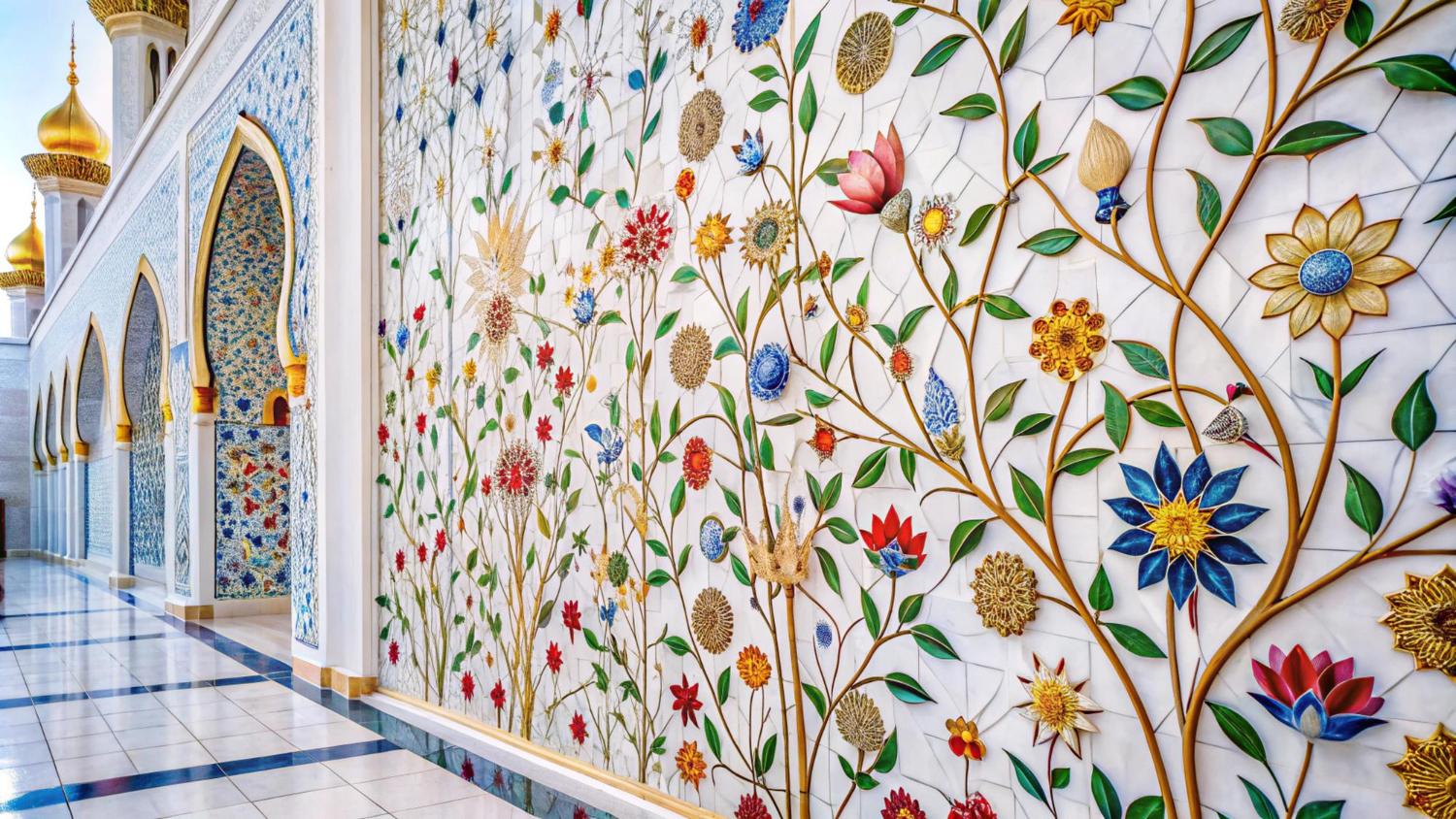
Najdi inspired wall printing designs work best when they start from a written design brief rather than a borrowed motif. Collect documented references, such as mud-brick textures, triangular wall openings and painted Najdi doors, decide which elements fit your room, then have a designer reinterpret them at the correct scale before anything is printed.
Najdi heritage is having a strong moment in Riyadh interiors, and it is easy to see why. The architecture of central Arabia is calm, earthy and geometric, which suits modern villas and majlis rooms. The risk is that a quick search for "Najdi pattern" returns images with no source, mixed regional styles and motifs that lose their meaning once they are stretched across a three-metre wall. This guide explains how to turn Najdi inspiration into a clear, respectful brief that a design and printing team can work from.
What Makes a Design Najdi Rather Than Generically Arabic?
Najd is the central region of Saudi Arabia, and its traditional buildings have a recognisable vocabulary. The UNESCO World Heritage listing of the At-Turaif District in ad-Dir'iyah (UNESCO, 2010) describes the Najdi building tradition, and its nomination documents note features such as mud-brick walls on stone foundations, palm-wood roof structures, small triangular openings high on the walls and wooden elements painted with geometric motifs.
For a printed wall, the most useful references usually fall into four groups:
- Wall surfaces: the soft, hand-finished texture of clay rendering and the warm range of earth tones it produces.
- Openings and parapets: rows of small triangles near the top of walls and stepped or triangular crenellations along rooflines.
- Painted doors: Najdi wooden doors, decorated with intersecting lines, circles and triangles in strong colours, often with decorative nails.
- Interior details: carved or painted bands around ceilings, niches and doorways in traditional homes.
It also helps to know what is not Najdi. Al-Qatt Al-Asiri, the colourful wall painting tradition of the Asir region, was inscribed on UNESCO's list of intangible cultural heritage in 2017, and it has its own history and makers. Mixing the two in one mural without intent can confuse the story you are trying to tell.
Why Should Najdi Inspired Wall Printing Designs Start With a Brief?
A brief protects both the result and the heritage behind it. Without one, the designer guesses, the client reacts to proofs and the project goes through several rounds of changes. With a brief, everyone agrees on meaning, colour and scale before the first concept is drawn.
A brief also forces a useful question early: do you want a literal reference, such as a recognisable door pattern, or an abstract interpretation that only hints at Najdi forms? Both are valid, but they lead to very different artwork.
How Do You Gather Reliable Najdi References?
Good references have a known source. Before you send images to a designer, check where each one comes from and what it shows.
- Your own photographs from heritage sites such as At-Turaif, old Riyadh neighbourhoods or museum visits are ideal, because you know their location and context.
- Published sources such as museum collections, heritage authority material and established news features about Najdi doors and craft give context you can cite in the brief.
- Family pieces such as an old door, chest or textile can carry personal meaning that makes the design truly yours.
Label every reference with what you like about it: the colour, the rhythm of the triangles, the proportion of a door panel. Avoid using images from unknown social media accounts as the main reference, because their origin and regional style are often unclear.
Which Najdi Elements Translate Well to a Printed Wall?
Not every architectural feature reads well as flat artwork. The list below summarises how common elements usually behave when printed.
- Triangular opening rows: Clean, strong rhythm at any size. Best for: borders near ceilings, majlis friezes, corridor bands.
- Painted door geometry: Detailed; needs careful scaling. Best for: feature panels, entrance walls, framed sections.
- Clay wall texture: Subtle; depends on file resolution. Best for: full-wall backgrounds behind simple furniture.
- Stepped parapets: Bold silhouette; reads from distance. Best for: long walls, stair walls, commercial spaces.
- Inscriptions from doors: Sensitive; text carries meaning. Use only with checked wording and approval.
If your concept combines Najdi forms with Islamic geometry, our guide to Islamic geometric wall printing and pattern scale covers symmetry and repeat sizes in more detail.
How Do You Write the Design Brief?
Use this checklist to build a one-page brief that a designer can act on.
- Room and purpose: majlis, entrance, dining room, corridor or commercial space, and the feeling you want guests to have.
- Wall facts: width, height, openings, sockets, lighting and the furniture that will sit in front of the wall.
- Literal or abstract: say clearly whether motifs should be recognisable or only suggested.
- References with notes: five to ten sourced images, each with one line about what to take from it.
- Palette: earth tones, door-inspired accents or a mix, matched to your floor, upholstery and joinery.
- Elements to avoid: motifs from other regions, text you have not checked, or anything that feels too busy for daily living.
- Approval steps: who signs off the concept, the colour proof and the final scaled file.
For larger reception rooms, the planning ideas in our article on majlis wall printing ideas that balance heritage and hospitality can help you decide which wall should carry the design.
How Do You Get Scale, Colour and Files Right?
Najdi motifs are often small on the original building. A row of triangular openings may be only a few hand widths tall, while your printed wall might span several metres. Decide early whether you will keep the original proportion and repeat it, or enlarge a single motif as a statement. Ask for a scaled mock-up on a photo of your actual wall so you can see the effect from the sofa, the door and the far end of the room.
Colour needs the same care. Earth tones shift under warm and cool lighting, so review proofs in the room's real light where possible. The final artwork must also meet the technical requirements for large-format printing; our artwork file requirements checklist for wall printing explains resolution, colour mode and file formats.
What Mistakes Should You Avoid?
- Copying a single online image without knowing its source or whether it is someone else's artwork.
- Mixing regional styles by accident, such as combining Najdi doors with Asiri wall painting without a clear concept.
- Adding inscriptions casually. Traditional doors often carried names, dates or prayers. Any text should be chosen with care and checked before printing.
- Making historical claims about a motif's meaning that you cannot support. Describe it as inspired by Najdi design instead.
- Overfilling the wall. Najdi architecture relies on plain surfaces as much as decoration, so leave breathing space.
Frequently Asked Questions
What colours suit a Najdi inspired printed wall?
Most Najdi-inspired schemes start with warm earth tones drawn from clay walls, such as sand, ochre and soft terracotta. Accent colours can come from painted Najdi doors, which often use stronger tones in geometric patterns. Choose accents that also appear in your furniture or textiles, and review proofs under the room's real lighting before approving.
Can I use a Najdi door design on my wall?
Yes, as inspiration. A designer can reinterpret the geometry and colours of a door you photographed or own, adjusting proportions for your wall. Avoid copying another artist's work directly, and treat any inscriptions with care, since traditional doors sometimes carried names, dates or prayers that hold personal or religious meaning.
Is Najdi style the same as Al-Qatt Al-Asiri?
No. Najdi design comes from central Saudi Arabia and is known for mud-brick architecture, triangular openings and painted wooden doors. Al-Qatt Al-Asiri is a colourful wall painting tradition from the Asir region in the southwest, recognised by UNESCO in 2017. Both are part of Saudi heritage but have different origins and visual languages.
Which rooms suit Najdi inspired wall printing designs?
Majlis rooms, entrance halls and dining areas suit Najdi-inspired designs well, because these spaces welcome guests and benefit from a sense of heritage. Long corridors can carry a triangular frieze, while bedrooms usually need a softer, textural interpretation. Restaurants and cafes in Riyadh also use these motifs to create a local identity.
How do I approve the design before printing?
Agree on three checkpoints: a concept sketch that shows the overall idea, a colour proof reviewed in the room's light, and a scaled mock-up on a photo of your actual wall. Sign off each stage in writing. This keeps changes early, when they are simple, rather than after the artwork has been prepared for print.
Conclusion
Najdi inspired wall printing designs are most successful when they are planned as a brief, not copied as a motif. Gather references with a known source, choose the elements that suit your room, decide between a literal and an abstract approach, and approve concept, colour and scale in clear stages. The result is a wall that feels rooted in central Arabian heritage while fitting the way you live today.
Planning a Najdi-inspired feature wall for your home, majlis or business in Riyadh? Share your wall details and references with WallInks and the team will help you shape the brief, review the design and plan a printed wall that respects the heritage behind it.