
Children's Room Wall-Printing Ideas That Can Grow With Their Interests
Kids room wall printing ideas for Saudi homes: themes that grow with your child, where to place the mural, licensed artwork, colours by age, checklist.
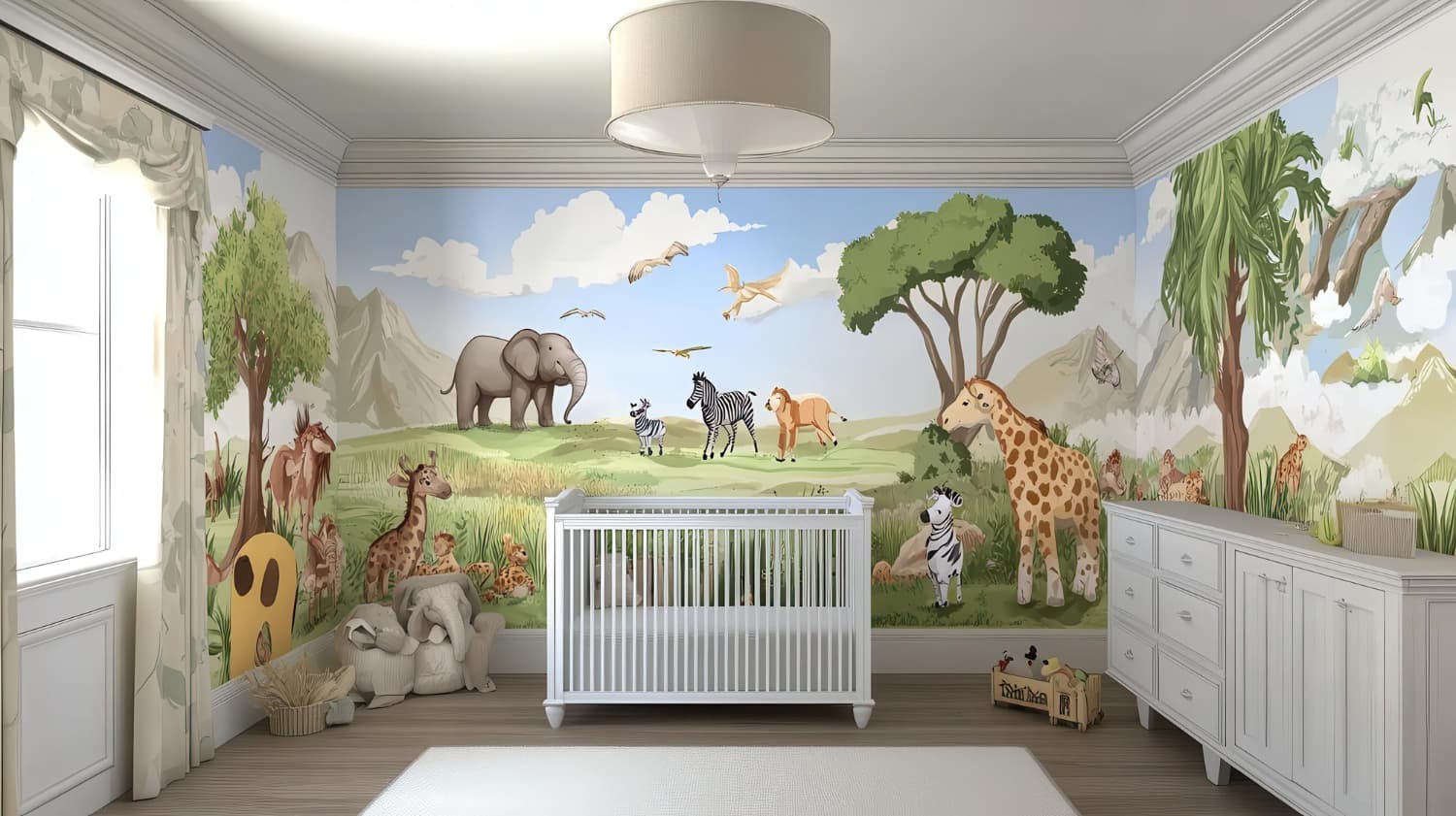
The best kids room wall printing ideas use designs that can grow with the child: soft landscapes, maps, abstract shapes, animals drawn in a calm style or one feature wall framing the bed or play zone. Plan the design around the furniture that will change, keep busy details at a child's eye level and leave room to refresh later.
A printed wall in a child's room is a longer commitment than a poster or a set of decals. It is printed directly onto the wall, so the design should still feel right when a four-year-old becomes a ten-year-old. This guide shares ideas for families in Riyadh, Jeddah and across Saudi Arabia, and explains how to plan a design that lasts. If your main questions are about ink, curing or whether wall printing suits a child's room at all, start with our guide to questions to ask before booking wall printing for children's rooms.
Which Kids Room Wall Printing Ideas Last the Longest?
Themes that are not tied to one character, one age or one trend tend to last longest. They work for a toddler and still look intentional for a pre-teen.
Nature and landscape scenes
Desert dunes at dusk, palm oases, mountains, forests or a calm sea are easy to live with. They suit Saudi homes because they connect to familiar landscapes, and they can be printed in muted tones that sit well with changing bedding and furniture.
World maps and star charts
A large map or night-sky design is playful for young children and useful for older ones. It becomes a learning tool, a talking point and a backdrop for a study desk later.
Abstract shapes and colour blocks
Arches, waves, circles and soft geometric bands are the most flexible choice. Children can add their own artwork, shelves or pin boards on top, and the wall still looks designed.
Animals in a calm illustration style
Animals remain popular across ages. A hand-drawn or watercolour style ages better than bright cartoon versions, and it can be paired with growth charts or name details.
How Do You Plan a Mural That Grows With Your Child?
Think in three layers. The background layer is the large printed scene. The middle layer is furniture: bed, desk, wardrobe and shelves. The top layer is what changes often: posters, toys, artwork and soft furnishings.
- Keep the printed layer calm enough that the top layer can change without clashing.
- Use colours from the main palette of the room rather than strong primary colours everywhere.
- Place the most detailed part of the design where it will stay visible as furniture changes.
- Avoid printing names or ages as the focal point if you want the wall to last several years.
Before committing, mock up the design on a photo of the actual wall. Seeing it with the bed, curtains and toys in place shows whether it will feel busy or balanced.
Where Should the Printed Wall Go in a Child's Room?
The right wall depends on how the room is used. In most bedrooms the wall behind the bed is the natural focal point because it is the least likely to be blocked by furniture. In a playroom, the wall facing the door often works better because it sets the mood as soon as you walk in.
- Behind the bed: frames the sleep area and works well with a headboard or canopy.
- Play zone wall: defines a reading corner or play area in a shared room.
- Desk wall: choose a quieter pattern so it does not distract during homework.
- Around windows and doors: plan carefully so key details are not cut by frames or switches.
For more on choosing the focal wall using sightlines, furniture height and light, read our guide to wall mural placement ideas beyond the obvious wall.
Can You Print Favourite Characters on a Kids Room Wall?
Children often ask for characters from films, games or books. Most well-known characters are protected by copyright and trademark, so printing them on a wall needs artwork that is properly licensed for that use. In Saudi Arabia, intellectual property is overseen by the Saudi Authority for Intellectual Property (SAIP), and rights holders control how their characters are reproduced.
There are practical alternatives that often age better:
- Commission original characters inspired by the colours and mood the child loves.
- Use the theme rather than the character, such as space, ocean, jungle or castles.
- Keep licensed items for removable pieces such as bedding, posters and toys, which are easy to replace when interests change.
How Do You Choose Colours and Detail for Different Ages?
Age changes how a child uses the room, so the design should respond to it.
- Babies and toddlers: soft, low-contrast colours and simple shapes, such as clouds, gentle animals and pastel landscapes.
- Early school years: more detail at eye level and room for discovery, such as maps, jungles, underwater scenes and space.
- Pre-teens: cleaner layouts with space for personal items, such as abstract shapes, skylines, star charts and colour blocks.
- Shared rooms: one unifying scene with two zones, such as a landscape that flows across both beds.
Natural light also matters. North-facing rooms can feel cooler, so warmer tones help, while rooms with strong afternoon sun may suit softer colours. Ask to see a printed sample or mockup under your room's light before approving.
How Do You Prepare for a Kids Room Wall Printing Project?
Good preparation makes the design and the visit easier. Use this checklist before you request a quote:
- Measure the wall height and width, and note windows, doors, sockets and switches.
- Take clear photos of the wall in daylight, including the floor and ceiling edges.
- Note the current paint finish and any cracks, damp patches or repairs.
- Decide the theme, colour palette and which furniture will stay.
- Collect reference images and your child's ideas in one folder.
- Plan when the room can be empty for the visit and afterwards.
Our guide to the information to send when requesting a wall-printing quote explains each item in more detail.
What Mistakes Should Parents Avoid?
- Designing for this year only: a theme tied to a current craze can feel dated quickly.
- Filling every wall: one feature wall is usually enough; others can stay plain.
- Ignoring furniture plans: a bunk bed or tall wardrobe can hide the best part of the design.
- Too much contrast near the bed: busy, bright patterns can feel overwhelming in a sleep space.
- Skipping the mockup: always approve a visual on a photo of your own wall.
Frequently Asked Questions
What is the best theme for a kids room wall print?
Themes that are not tied to one character or age tend to work best, such as landscapes, maps, star charts, animals in a calm style or abstract shapes. They suit young children and still feel right as they grow. Choose colours from the room's main palette so bedding and toys can change without clashing.
Which wall should we print in a child's bedroom?
The wall behind the bed is usually the best choice because furniture rarely blocks it and it frames the sleep area. In playrooms, the wall facing the door often works well. Avoid walls that will be covered by tall wardrobes or bunk beds, and plan around windows, doors and switches.
Can we print a cartoon character on the wall?
Most popular characters are protected by copyright and trademark, so you need artwork licensed for that use. A practical alternative is an original design inspired by the same colours and theme, while keeping licensed characters on bedding, posters and toys that are easy to change as your child's interests develop.
How do we make a kids room mural last as the child grows?
Use a calm background scene, keep detailed areas where furniture will not hide them and avoid making names or ages the focal point. Leave space for shelves, pin boards and artwork on top of the print. Approve a mockup on a photo of your actual wall before the visit.
Is one printed wall enough for a child's room?
In most rooms, yes. One well-placed feature wall gives the room character, while plain walls keep it calm and leave space for storage and personal items. In shared rooms, a single scene that flows behind both beds can unify the space and still give each child a defined zone.
Conclusion
The strongest kids room wall printing ideas are flexible: calm landscapes, maps, star charts, gentle animals or abstract shapes that can grow with your child. Plan the print as a background layer, place it where furniture will not hide it, use licensed or original artwork and approve a mockup on your own wall before the visit.
Planning a printed wall for your child's room in Riyadh, Jeddah or elsewhere in Saudi Arabia? Share your wall photos, measurements and ideas with the WallInks team, and we will help you shape a design that suits the room today and still feels right as your child grows.