
Islamic Geometric Wall Printing: Pattern, Scale and Placement
Plan Islamic geometric wall printing in Saudi Arabia: choose a pattern family, size the repeat unit, place stars around furniture and approve the proof.
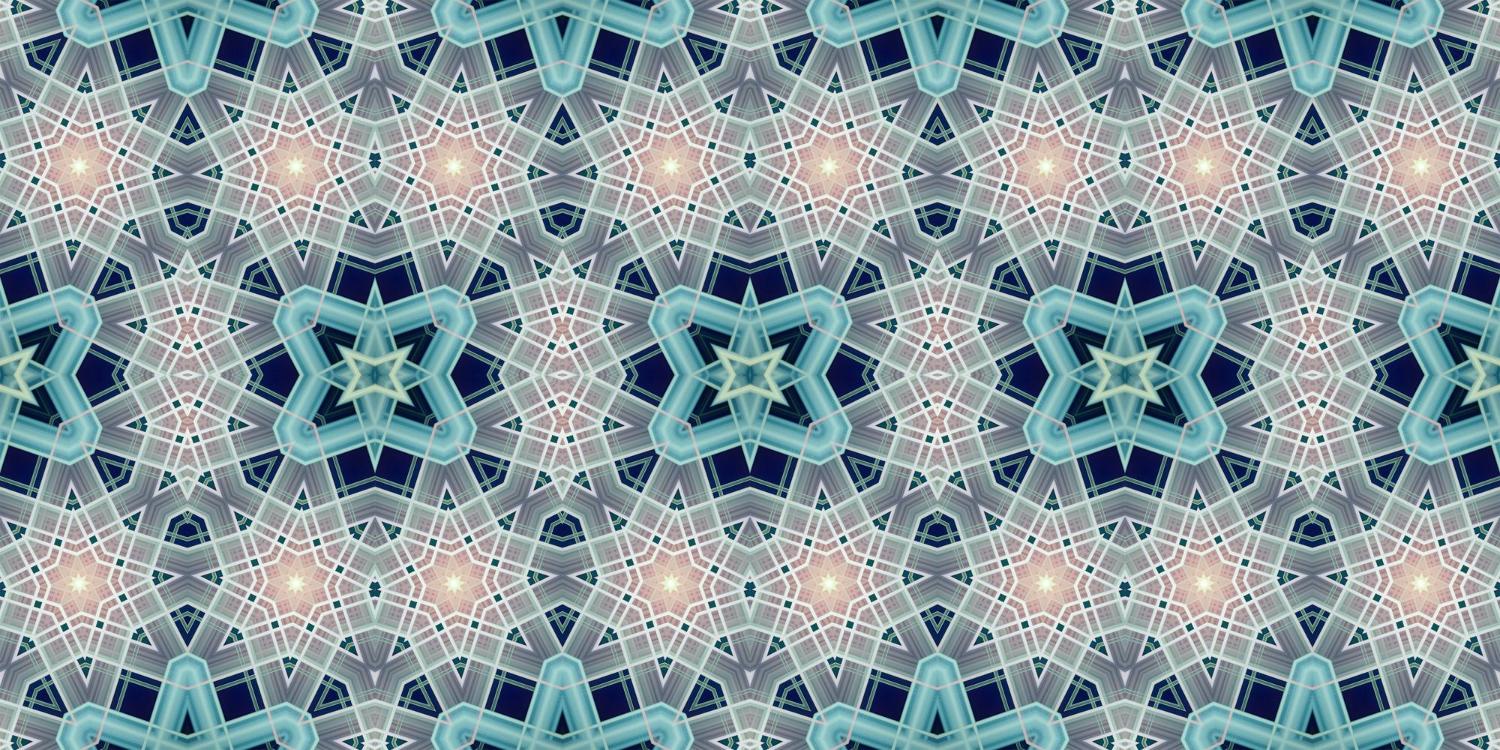
Islamic geometric wall printing reproduces star-and-polygon patterns directly onto a prepared wall, so the design can be sized to the exact surface. Good results depend on three decisions made before printing: which pattern family and symmetry to use, how large each repeat unit should be from the viewing distance, and where the pattern starts and stops.
Geometric patterns are one of the most recognisable parts of the Islamic artistic tradition, and they translate well to printed walls because they are built from precise, repeatable geometry rather than freehand imagery. This guide is for homeowners in Riyadh and Jeddah, and for designers working on Saudi interiors, who want a pattern wall that looks deliberate rather than like a sheet of wallpaper stretched to fit. It covers how the patterns are constructed, how to choose scale and placement, and what to check on the proof. It deliberately leaves out calligraphy, which has its own approval process.
What Is Islamic Geometric Wall Printing?
Islamic geometric wall printing is the process of designing a pattern based on Islamic geometric principles and printing it directly onto a specific wall, rather than buying a pre-made roll or panel. Because the artwork is prepared for one surface, the repeat can be aligned to corners, doors, niches and furniture, and the colours can be matched to the room's existing materials.
It is worth separating this from two related ideas. Calligraphy uses Arabic script as the design element and needs text and spelling approval, which we cover in our guide to planning an Arabic calligraphy wall from meaning to final proof. Arabesque, or floral and vegetal ornament, follows curving growth lines. Geometric work is the non-text, straight-line and compass-based branch of the tradition, and that is the focus here.
How Are Islamic Geometric Patterns Built?
Every geometric pattern starts from a small tile of geometry called the repeat unit. The Metropolitan Museum of Art, in its essay "Geometric Patterns in Islamic Art", describes the basic repeat units as circles and interlaced circles, squares or four-sided polygons, and the star pattern, which is derived from squares and triangles. The unit is drawn with compass and straightedge, then reflected and repeated across the surface until the full field appears.
Symmetry families and what they look like
The grid underneath the pattern sets its character. A square grid produces four-fold symmetry and the familiar eight-pointed star. A triangular or hexagonal grid produces six-fold symmetry with six- and twelve-pointed stars. Ten-fold patterns, built around ten-pointed stars and pentagonal shapes, are more complex. Research by Peter Lu and Paul Steinhardt, published in Science in 2007, showed that some medieval craftsmen planned these intricate patterns using a small set of decorated polygon tiles, known as girih tiles.
- Four-fold (eight-pointed star): calm, orderly and easy to read from a distance; suits large majlis walls and entrances.
- Six-fold (six- and twelve-pointed stars): denser and more energetic; works well on medium walls and dining areas.
- Ten-fold (ten-pointed stars and girih-style tiles): intricate and rewarding up close; best where people stand or sit near the wall.
Why the repeat unit matters for printing
Because the whole wall is generated from one unit, any error in that unit repeats everywhere. A line that is slightly off-angle or a star that is not closed will show dozens of times. This is why the artwork should be drawn as clean vector geometry, not traced from a low-resolution photograph. Our wall printing artwork file requirements checklist explains the file formats and resolution checks that apply before any print is scheduled.
Inspired Interpretation or Faithful Reproduction?
Before choosing colours, decide what kind of geometric wall you want. There are two honest approaches, and each needs a different brief.
A faithful reproduction follows a documented historical pattern closely, for example a design recorded from a known mosque, palace or manuscript. The value lies in accuracy: line proportions, the number of star points and the way bands interlace should match the source. If you choose this route, name the source in the brief and keep a reference image with the approval file, so everyone checks the proof against the same original.
An inspired interpretation keeps the geometric logic but changes scale, colour, line weight or density to suit a modern room. This is often the better fit for contemporary Saudi villas and apartments. It should still be described as inspired by a tradition or a specific pattern family, rather than presented as a copy of a historic monument.
Saudi Arabia has its own geometric heritage to draw on. UNESCO inscribed Al-Qatt Al-Asiri, the traditional interior wall decoration of the Asir region, on its Representative List of the Intangible Cultural Heritage of Humanity in 2017, describing geometric shapes and symbols painted on interior walls, traditionally by women. A design that takes cues from regional traditions like this should credit them in the project notes and avoid claiming to be an authentic example of the craft.
How Do You Choose the Right Scale for a Geometric Pattern?
Scale is the decision that most often separates a striking pattern wall from a busy one. The same eight-pointed star can feel monumental or fussy depending only on the size of the repeat unit.
Start from the viewing distance
Think about where people will usually see the wall from. A wall facing the main seating area of a majlis is viewed from across the room, so a larger repeat with bolder lines reads clearly. A corridor wall is seen at close range and at an angle, so a smaller, finer pattern can work, provided the lines are not so thin that they blur. If the room is compact, the guidance in our article on getting scale and cropping right in small rooms applies equally to geometric repeats.
Decide where the pattern ends
Geometric patterns look most deliberate when the edges are planned. Three common options are:
- Centred field: the main star sits on the wall's centre line, with the pattern cropped evenly on both sides.
- Framed panel: the pattern sits inside a printed border band, leaving plain wall around it, which suits walls with doors or switches.
- Full bleed: the pattern runs edge to edge, cropped at the corners, which gives the strongest effect but needs careful alignment at ceiling and skirting lines.
Whichever option you choose, avoid cutting a primary star in half at eye level or directly above a sofa. Shift the repeat until complete stars land where the eye naturally rests.
Where Does Geometric Wall Printing Work Best?
Geometric patterns are flexible, but some locations suit them particularly well.
- Majlis feature walls: a large four-fold pattern behind the main seating gives a formal, welcoming backdrop. For layout ideas that combine heritage and contemporary design, see our majlis wall printing ideas.
- Entrances and stair landings: a framed panel creates a focal point without overwhelming a circulation space.
- Dining areas: a medium six-fold pattern adds richness behind a sideboard or along a long wall.
- Quiet corners: soft, low-contrast geometry suits a reading or reflection corner. If the space is used for prayer, many families prefer simple, calm designs that do not distract, so discuss this in the brief.
- Commercial interiors: hotel lobbies, restaurants and reception walls can use geometric patterns in brand colours, as long as the brand team approves the final proof.
Which Colours, Line Weights and Finishes Suit Geometric Patterns?
Colour changes how complex a pattern feels. Two-colour schemes, such as a light line on a deep field, keep even intricate ten-fold designs readable. Multi-colour fills, where each polygon type has its own shade, look richer but need careful balance so that one shape does not dominate.
Line weight matters as much as colour. Thin lines suit close viewing and minimalist rooms; thicker interlacing bands give a more traditional, carved or tiled character. Gold, sand, ivory, deep green and indigo are common choices in Saudi interiors, but the best palette is the one that matches the room's flooring, joinery and fabrics. Ask for a colour proof under the room's actual lighting, because warm evening lights can shift how golds and creams appear.
How Should You Prepare and Approve the Final Proof?
A geometric wall needs a precise approval step, because small alignment problems are easy to miss on a screen and obvious on the wall. Use this checklist before signing off:
- Wall dimensions measured on site, including doors, windows, sockets and any niches.
- Pattern family and symmetry confirmed, with the source or inspiration named.
- Repeat unit size agreed against the main viewing distance.
- Centre line, edge cropping and border option shown on a scaled mockup.
- Primary stars positioned clear of switches, frames and furniture edges.
- Line weight and colour palette approved, ideally with a printed colour sample.
- Vector artwork checked for closed shapes and consistent angles.
- One named person responsible for final approval.
Once the proof is approved, any change to dimensions or placement should go back through the same checklist rather than being adjusted on site.
Frequently Asked Questions
Is Islamic geometric wall printing the same as wallpaper?
No. Wallpaper uses a fixed roll with a set repeat, while a printed wall is designed for one surface. That means the pattern can be sized, centred and cropped around doors, windows and furniture. It also avoids visible seams between strips, which can interrupt the precise lines that geometric patterns depend on.
Which geometric pattern suits a large majlis wall?
Four-fold patterns built around the eight-pointed star are a common choice for large majlis walls because they stay clear and calm from across the room. A larger repeat unit with bold interlacing lines usually reads better than a dense, fine pattern. Confirm the final scale on a mockup that shows the seating layout.
Can a printed geometric pattern include our own colours?
Yes. Because the artwork is prepared specifically for your wall, the palette can follow your flooring, joinery, fabrics or brand colours. It is best to approve a printed colour sample and view it under the room's actual lighting, since warm lamps and daylight can change how golds, creams and greens appear.
Do I need to credit the source of a traditional pattern?
It is good practice. If the design closely follows a documented historic pattern, name that source in the brief and keep a reference image with the approval file. If the design is a modern interpretation, describe it as inspired by a tradition or pattern family rather than presenting it as a copy of a specific monument.
What information should I send to start a geometric wall project?
Send clear photos of the wall, its width and height, the city, the room's use and any doors, sockets or niches. Add reference images of patterns you like, your preferred colours and whether you want a faithful reproduction or an inspired interpretation. This lets the design team suggest a pattern family and scale.
Conclusion
A successful Islamic geometric wall is planned, not stretched to fit. Choose the pattern family and symmetry that suits the room's character, size the repeat unit from the main viewing distance, decide how the pattern starts and ends, and be clear about whether the design is a faithful reproduction or an inspired interpretation with its source credited. Finish with a careful proof check so that every star and band lands exactly where it should.
If you are planning a geometric pattern wall for a villa, majlis or commercial space in Riyadh, Jeddah or elsewhere in Saudi Arabia, share your wall photos and pattern ideas with the WallInks team to start shaping a design that fits your space.