
Bedroom Wall-Printing Ideas That Work With the Room, Not Against It
Bedroom wall printing ideas for Saudi homes: choose the right wall, plan around the headboard, lights and wardrobes, and pick calm styles for the room.
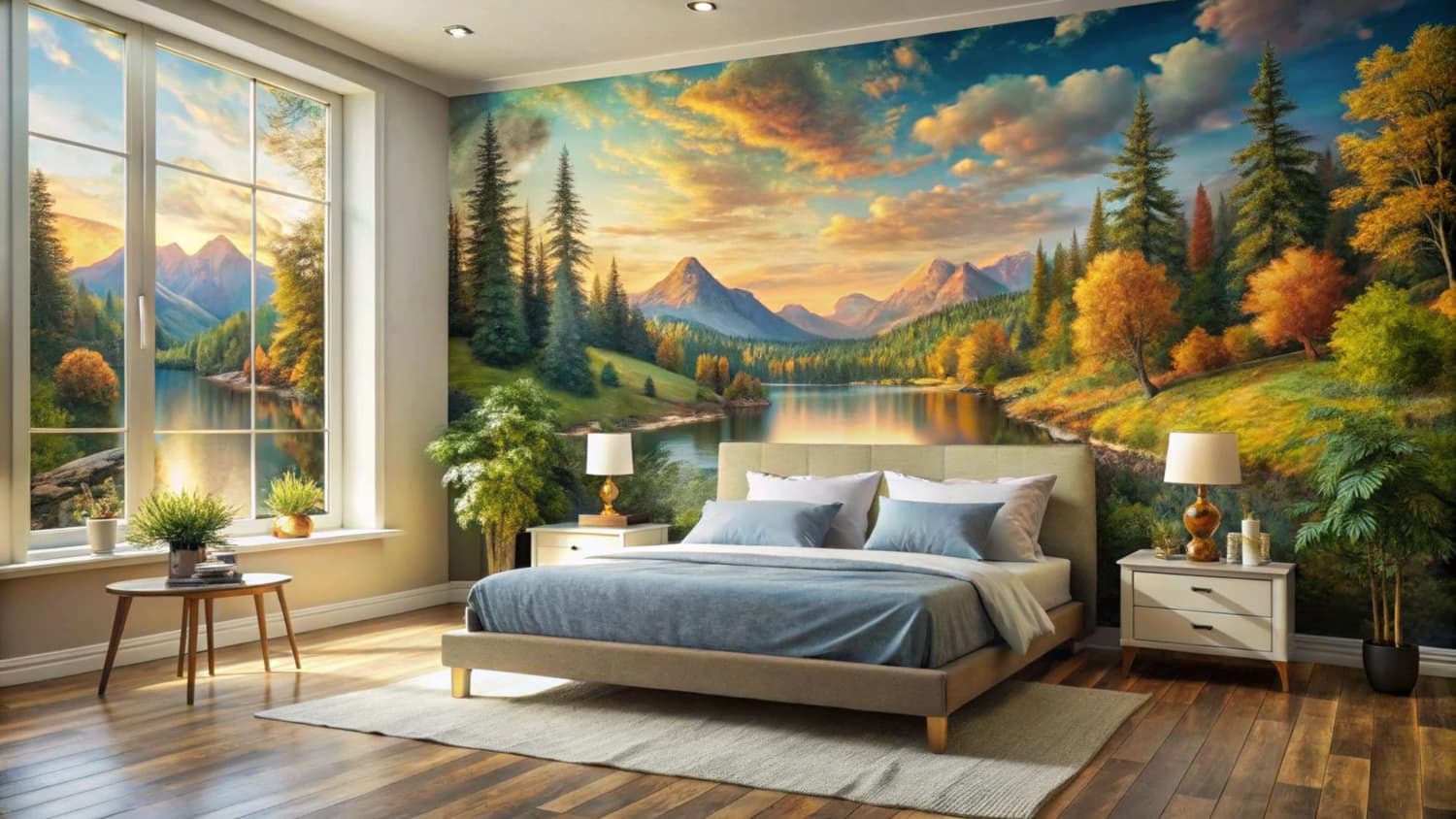
The best bedroom wall printing ideas start with the headboard wall: a calm design placed behind and above the bed, sized to the headboard height and bedside lighting, in colours that suit the room's fabrics. Keep busy artwork away from the wall you face when lying down, and plan around wardrobes, switches and windows before choosing a design.
Why Is the Bedroom Different From Other Rooms for Wall Printing?
A majlis or living room is designed to impress guests. A bedroom is a private room you mostly see at the start and end of the day, often in soft evening light. That changes the brief. A design that looks striking in a showroom can feel tiring when it is the last thing you see before sleep and the first thing you see in the morning.
Bedrooms also have more fixed objects per metre of wall than most rooms: a headboard, two bedside tables, reading lamps, a wardrobe, a mirror, a television in some homes and curtains on at least one wall. Good bedroom wall printing works with these objects rather than fighting them. If you are still deciding which wall should carry the design, our guide to choosing the right wall for a printed mural explains how sightlines and furniture affect placement.
Which Bedroom Wall Should You Print?
In most Saudi bedrooms the headboard wall is the natural choice. It is the wall people see when they enter, it frames the bed, and the furniture in front of it hides the lower part of the wall, so the design only needs to work above the bedside height.
- Headboard wall: the usual focal wall. The design sits behind the bed and rises above it, so it reads as part of the bed rather than a separate picture.
- Wall facing the bed: the wall you look at when lying down. Keep it quiet: soft texture, a gentle gradient or nothing at all.
- Wardrobe or dressing wall: printing on fitted wardrobe doors is a separate question of material and surface; a printed band above or beside the wardrobe is often simpler.
- Window wall: curtains cover much of it for part of the day, so it rarely suits a main design.
Bedroom Wall Printing Ideas by Style
These directions are examples to discuss with your designer, not fixed packages. Each one can be adjusted to the room's size, colours and the family's taste.
Understated texture and tone
Soft plaster effects, linen-like textures, faint watercolour washes or a two-tone gradient behind the bed. These designs add depth without drawing too much attention, and they suit master bedrooms where the bedding, curtains and lighting already carry colour.
Graphic and geometric designs
Arches, panels, thin line work or a simple geometric frame around the headboard. A printed arch behind the bed is popular because it creates a "built-in" headboard look without joinery. Najdi-inspired geometry in muted tones can also work, as long as the scale stays calm.
Botanical and landscape scenes
Palm fronds, desert dunes at dusk, mountain silhouettes or loose floral patterns. Choose low-contrast versions with a limited palette, and keep the busiest part of the image above the headboard rather than at pillow height.
Photographic murals
A wide landscape photograph can make a small bedroom feel more open. It needs a high-resolution source file and a clear decision about where the horizon line falls relative to the headboard. Our guide to choosing artwork for wall printing by style, size and quality covers how to check whether an image will hold up at wall scale.
Children's and guest bedrooms
Children's rooms usually suit lighter, more playful designs, ideally ones that can stay relevant as the child grows. Guest bedrooms benefit from neutral designs that suit many visitors. Both are separate briefs from the master bedroom.
How Do You Plan the Design Around the Headboard?
The headboard is the anchor. Measure it before anyone draws a design, and plan the artwork in three bands.
- Bedside zone (floor to about bedside-table height): mostly hidden by furniture. Keep it plain or let the design fade out.
- Headboard zone (bedside height to top of headboard): partly hidden. Avoid placing faces, text or key details here.
- Feature zone (above the headboard): where the design is fully visible. Put the main shapes and colours here.
Note the positions of reading lamps, wall lights and switches. Wall-mounted lights cast pools of light on the print, so a key detail directly behind a lamp may be lost or over-lit. Decide early whether the design should be centred on the bed or on the wall; if the bed is not centred on the wall, centring the design on the bed usually looks more deliberate.
How Should Colour and Lighting Shape a Bedroom Design?
Bedrooms are often seen under warm, low evening light, which shifts colours towards yellow and reduces contrast. Before approving a design, ask to see the mock-up at the brightness you actually use at night, not only on a bright laptop screen.
- Pick two or three colours from the bedding, curtains or headboard fabric and build the palette around them.
- Use stronger contrast only in the feature zone above the headboard.
- Remember that very dark designs make a small room feel smaller, while very pale designs can disappear under warm light.
- Check how daylight from the window falls on the wall at different times of day.
Avoid promises about mood or sleep. A design can make a room feel calmer or more personal, but how people rest depends on many other things.
What Should You Prepare Before the Site Survey?
A little preparation makes the survey and quotation faster and more accurate. Have these ready:
- Wall width and height, and the headboard width and height.
- Photos of the wall straight on, plus photos of switches, sockets, lights and any air-conditioning units.
- The wall's condition: new paint, old paint, cracks, damp marks or texture.
- Two or three reference images of designs you like, and one you dislike.
- Whether the bed and bedside tables will be moved or stay in place during the work.
Our wall printing site survey checklist lists what the team will check on the day.
Common Mistakes With Bedroom Wall Printing
- Designing for the photo, not the room. A dramatic image that looks good online can feel heavy in a small bedroom.
- Ignoring the headboard. Key details hidden behind the bed are wasted.
- Printing the wall you face in bed with a busy design. Keep that wall calm.
- Forgetting lights and switches. Plan them into the artwork rather than printing over them.
- Too many colours. A tight palette tied to the fabrics looks more finished.
- Skipping the mock-up approval. Always approve a scaled mock-up on a photo of your actual wall.
Frequently Asked Questions
What is the best wall in a bedroom for wall printing?
In most bedrooms the headboard wall works best. It is the first wall people see, it frames the bed, and the furniture in front hides the lower part, so the design only needs to work above bedside height. The wall you face when lying down is usually better kept calm or plain.
Can wall printing go behind a bed instead of a headboard?
Yes. A printed arch, panel or frame behind the bed can create the look of a headboard without joinery. Measure the bed and mattress height first, so the printed shape sits at the right level, and plan around any wall lights or switches near the bedside tables.
Which colours suit a printed bedroom wall?
Colours taken from the bedding, curtains or headboard fabric usually work best. Two or three related tones look calmer than many contrasting ones. Check the mock-up under the warm evening light you actually use, because low light can make pale colours fade and dark colours feel heavier.
Do I need to move the bed for wall printing?
Usually the bed and bedside tables need to be moved away from the wall so the team has clear access, then put back after the work. Confirm this during the site survey, along with any items that should be covered or removed from the room on the day.
How do I choose a design for a children's bedroom?
Choose a design that can grow with the child, such as landscapes, simple shapes or soft patterns, rather than a theme they may outgrow quickly. Keep the main design at a height that is visible but practical, and discuss the surface condition and design approval with the team before booking.
Conclusion
Good bedroom wall printing ideas work with the room: the headboard wall carries the design, the wall you face in bed stays calm, and the artwork is planned in bands around the bedside, headboard and feature zones. Build the palette from your fabrics, check the mock-up in evening light, and prepare measurements and photos before the survey.
Ready to plan a printed bedroom wall? Share your room photos and measurements with WallInks to start a design brief, discuss style options and arrange a site survey in Riyadh, Jeddah or elsewhere in Saudi Arabia.